

The Surprising Reason Your Shower May Lose Pressure
News originally published by
Nashville & Davidson County - TennesseePicture this:
It’s early morning, you’re rushing to get ready, you hop in the shower and instead of the strong spray you expected, you get… a dribble. You tilt your head back, covered in shampoo, waiting for the pressure to pick up. It doesn’t. And yet. Somewhere, just down the street, someone’s lawn is enjoying a perfect, steady irrigation cycle.
You both have water. But at that moment, their sprinklers are getting all the pressure.
This little moment tells a much bigger story about how water moves through our city every day, and how our collective habits shape the experience for everyone else on the system.
This is why Metro Water Services is asking customers with automatic irrigation systems to help reduce early‑morning pressure drops by running sprinklers earlier and on staggered schedules.
How Our Routines Create Predictable Surges
Across Metro Water’s service area, customer usage follows a consistent pattern.
In cooler months, most households use water during the day by doing normal everyday tasks. Washing dishes, taking showers, doing laundry, to just name a few. There’s a bump in usage in the morning as people get ready for work and school, then it slowly tapers off.
But during the warmer months?
That pattern shifts dramatically.
In summer, there is an exponential increase of water demand because of irrigation systems. While indoor water use peaks around the time you’re getting ready (that 7 –9 a.m. window), irrigation tends to kick on even earlier. In many neighborhoods, sprinklers start firing between 4–5 a.m., continuing right through the hours when families are getting ready for their day.
So, when your neighbors’ irrigation is running at full blast before sunrise and everyone’s faucets turn on at 7 a.m., that’s when the system feels the squeeze. Water moves faster through the pipes, friction builds, and pressure drops. Higher elevations feel it the most and may be greeted with a dribbly sink or slow-moving shower water.
Why Certain Days Feel Worse Than Others
You might notice some mornings are worse than others, and there’s a distinct reason for this. Irrigation demand tends to spike on the same days each week. Monday, Wednesday, and Friday are consistently the highest demand mornings across the system. Reservoir levels drop quickly on those days as thousands of sprinklers activate around the same time.
By comparison, Tuesdays and Thursdays seem “calmer”. Not because people are showering less, but simply because fewer irrigation systems are running all at once.
The Nerd Part: Numbers Don’t Lie
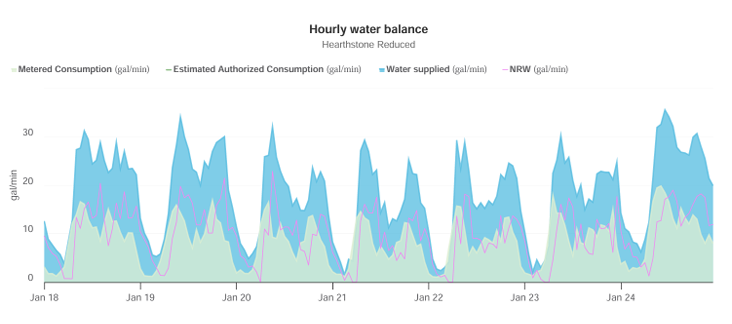
To help visualize how customer behavior shapes our water system, we’re sharing two sets of graphs. One shows water usage patterns and the other shows the pressure impacts that result from those patterns.
Water Usage Patterns
The first set of graphs highlights just how much seasonal and everyday habits influence demand.
In January, when irrigation and outdoor use are minimal, the peak flow reached about 35 gallons per minute. Most activity occurred during the day, with a modest morning bump between 8–10 a.m.
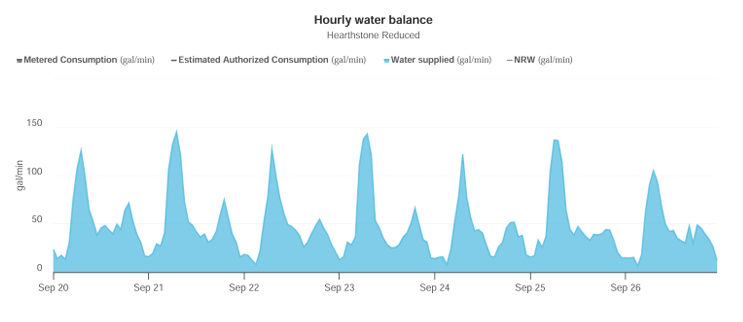
By comparison, the same zone 2 weeks ago showed a dramatically higher peak of 150 gallons per minute. The most intense usage shifted earlier, running from 4–9 a.m., with the sharpest spike right at 7 a.m.
In other words, as we move into warmer months, not only does overall usage increase, but it also becomes highly concentrated in the early morning. This is partially due to irrigation systems running simultaneously across neighborhoods.
The second set of graphs shows how these usage surges affect system pressure. Water moves faster through the pipes when many customers are using it at the same time. That increased velocity creates more friction, which leads to greater pressure losses.
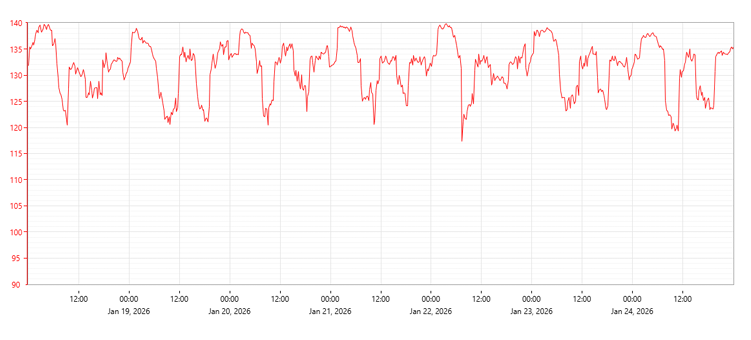
Because pressure trends inversely with flow, the system maintains steady, healthy pressure when usage is low.
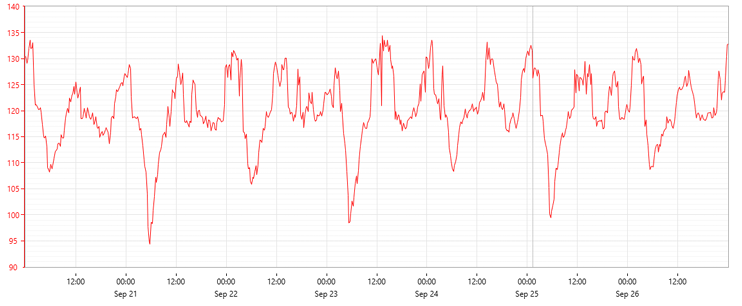
When hundreds of irrigation systems come online at once, the system must push significantly more water through the same pipes. The result is more extreme pressure dips. This is evidence of the system working harder to deliver water to everyone simultaneously.
These fluctuations illustrate the real impact of synchronized irrigation. Not only does it strain the system, but it also affects customers directly through lower, less consistent pressure during peak demand windows.
How Staggered Irrigation Helps Everyone
In response to the intense strain that irrigation places on pumps and pipes, especially during drought and heat, Metro Water Services is asking customers with automatic irrigation systems to water on staggered schedules. Not all at once and not during the busiest household-use hours.
• Water between midnight and 4 a.m.
• Odd-numbered addresses: Monday, Wednesday, Friday
• Even-numbered addresses: Tuesday, Thursday, Saturday
• Water no more than three days each week for two to three hours at a time.
This isn’t about restricting access to water as Nashville has plenty of supply (hello, Cumberland River!). It’s about managing demand, so everyone gets the pressure they need. Let’s think about our beloved neighbors up on the hill who also want to get to work and get their kids out the door!
Small Adjustments, Big Impact
A few tweaks to when irrigation systems run can help keep your shower strong, your neighbors’ faucets flowing, and the system operating smoothly across all elevations. It’s a community-wide effort that pays off in comfort, reliability, and public safety.
So, the next time you turn on your shower and get the satisfying burst of water you were hoping for, remember: your neighbors are doing their part, and your system and pressure is thanking them.
Legal Disclaimer:
EIN Presswire provides this news content "as is" without warranty of any kind. We do not accept any responsibility or liability for the accuracy, content, images, videos, licenses, completeness, legality, or reliability of the information contained in this article. If you have any complaints or copyright issues related to this article, kindly contact the author above.
